
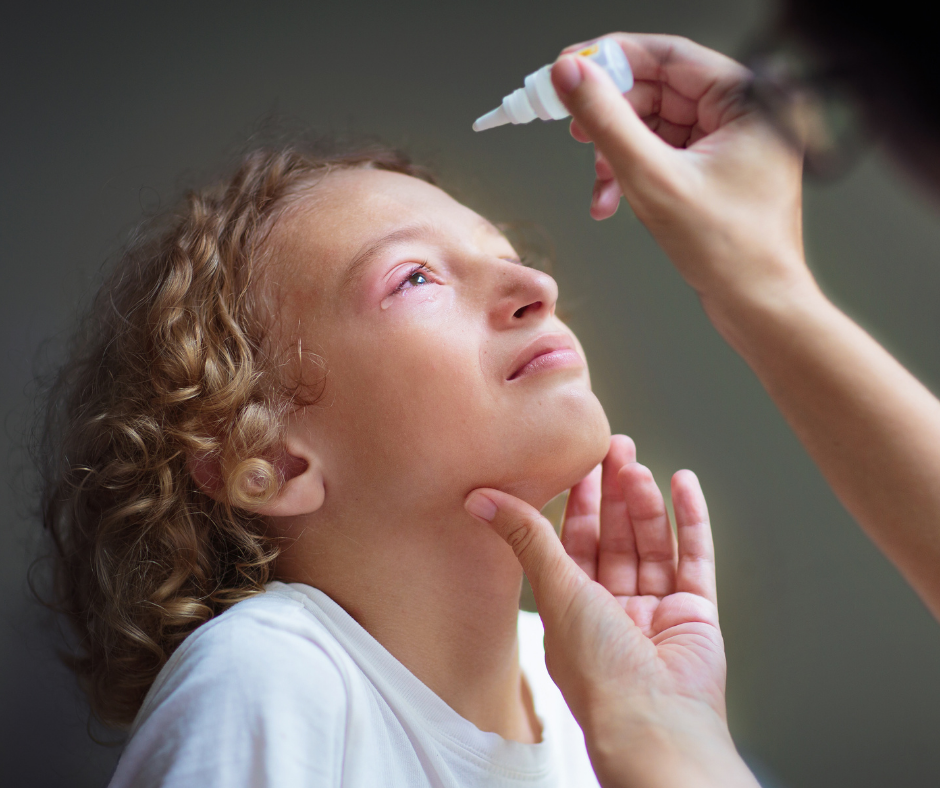
Pink eye, also known as conjunctivitis, is a common childhood infection that can spread quickly from person to person. If your child develops pink eye, one of the biggest questions parents have is: When can they safely return to school or daycare?
The answer depends on the type of conjunctivitis and whether symptoms have improved. Here are our general recommendations, but please note that schools also tend to have their own policies on this, so be sure to check with your child’s school policies in addition as well.
How Long Is Pink Eye Contagious?
Pink eye is generally considered contagious while the eye is still red, tearing, or producing discharge.
Bacterial Conjunctivitis
Bacterial pink eye can last up to 10 days, although symptoms may improve more quickly when antibiotic eye drops are prescribed.
In general, children can return to school or daycare when the redness and discharge have greatly improved. If your child’s eye is still significantly red or producing discharge, it’s best to keep them home and check with their pediatrician.
Viral Conjunctivitis
Viral pink eye can last up to 14 days and, unlike bacterial conjunctivitis, there is no medication that cures the viral infection.
Your child can generally return to school or childcare once tearing and discharge have greatly improved and the eye is no longer significantly red.
Because pink eye can have different causes, your pediatrician can help determine the most appropriate treatment and when your child should return to their normal activities.
How Can You Keep Pink Eye From Spreading?
Both viral and bacterial conjunctivitis can spread easily. Good hygiene is one of the best ways to help prevent it from spreading to siblings, classmates, and other family members.
If your child has pink eye:
- Wash hands frequently. Wash with soap and water, especially after touching the eyes, coughing, sneezing, eating, or using the bathroom.
- Avoid touching or rubbing the eyes. If your child touches their eyes, help them wash their hands afterward.
- Use clean towels and tissues. Use a fresh towel or tissue each time the face or eyes are wiped, and don’t share towels or washcloths.
- Don’t share personal items. Avoid sharing towels, pillows, eye drops, cosmetics, or other items that come into contact with the eyes.
- Skip contact lenses. Children who wear contacts should not wear them while they have conjunctivitis and should follow their eye doctor’s instructions for cleaning or replacing lenses.
- Avoid eye makeup. If older children or teens use eye makeup, they should avoid it while their eyes are infected and replace products that may have become contaminated.
When Should You Come See Your Pediatrician?
Not every red or irritated eye is pink eye. Contact your child’s pediatrician if you are unsure of the cause, symptoms are worsening, or your child is experiencing significant discomfort.
Remember: When it comes to returning to school or daycare, don’t focus only on the number of days your child has had pink eye. Improvement in redness, tearing, and discharge is an important factor in determining when they can return.
If you’re unsure whether your child is ready to go back to school, give us a call. We’re here to help keep your child healthy and their classmates healthy, too!
For questions, to book an appointment, or any other concerns, Augusta Pediatrics can be reached at (706) 868-0389. The information on this site is not intended or implied to be a substitute for professional medical advice, diagnosis or treatment. All content, including text, graphics, images and information, contained on or available through this web site is for general information purposes only.
Source: American Academy of Ophthalmology (AAO), “Pink Eye (Conjunctivitis).