
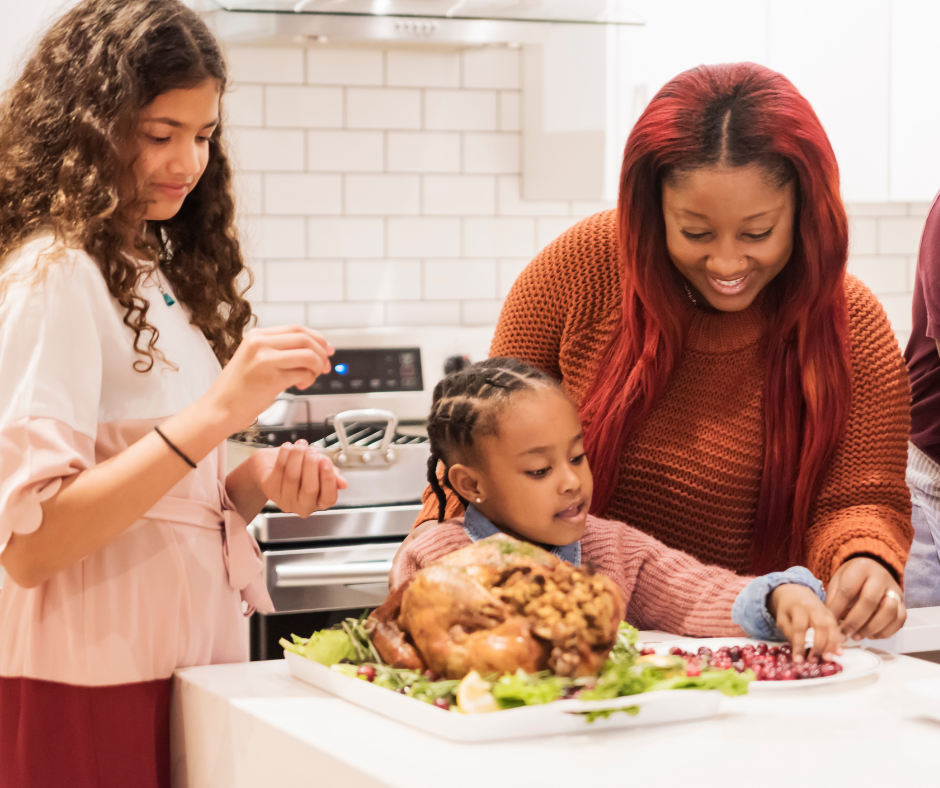
The Thanksgiving holiday is a time for family, gratitude, and gathering around the table to enjoy favorite holiday dishes. However parents of babies and young children should know that some traditional Thanksgiving foods can pose choking risks.
Young children are still developing the skills needed to chew and swallow safely, making certain foods especially difficult to manage. The good news? A few simple precautions can help make the holiday meal safer for everyone.
Here are 10 Thanksgiving foods parents should watch out for and tips for serving them more safely.
- Turkey
Turkey is a Thanksgiving staple, but large, dry, or chewy pieces of meat can be difficult for young children to chew and swallow.
Safety tip: Remove all bones and tough pieces. For younger children, finely shred or chop the meat and serve it in small, manageable pieces with enough moisture to make it easier to chew.
- Nuts
Whole nuts, including almonds, pecans, and peanuts, can pose a choking risk for young children because of their size and firm texture. They may also appear in holiday desserts, salads, and snack bowls.
Safety tip: Avoid whole nuts for young children. If serving nut butter, spread it thinly rather than offering a thick spoonful. Ask your pediatrician about age-appropriate ways to introduce nuts and other potential allergens.
- Popcorn
Popcorn may be a popular holiday snack, but its irregular shape and hard kernels can make it dangerous for young children.
Safety tip: Avoid popcorn for children younger than 4 years old, and consider your child’s individual chewing and swallowing skills as they grow.
- Raw Vegetables
Crunchy vegetables such as raw carrots, celery, and broccoli stems may appear on Thanksgiving appetizer trays. However, hard, raw vegetables can be difficult for young children to chew thoroughly.
Safety tip: Cook vegetables until soft and cut them into developmentally appropriate pieces. Avoid offering hard chunks of raw vegetables to young children.
- Sausage and Hot Dogs
Sausage links, cocktail sausages, and hot dogs can be choking hazards because of their firm, chewy texture and shape. Round slices can easily block a child’s airway.
Safety tip: Cook these foods thoroughly, remove any casing that may be difficult to chew, and cut them lengthwise before cutting them into small, manageable pieces. Avoid serving whole or round slices to young children.
- Marshmallows
Marshmallows may be a favorite topping for Thanksgiving sweet potatoes, but their soft, sticky texture can make them difficult for young children to manage safely.
Safety tip: Avoid serving marshmallows to babies and young children. Consider preparing sweet potatoes without whole marshmallows, or choose another topping appropriate for your child’s age and feeding skills.
- Hard Candy
Hard candies, mints, and other small sweets sometimes appear in candy dishes during holiday gatherings. These foods can easily become lodged in a child’s airway.
Safety tip: Keep hard candy away from young children. Offer age-appropriate alternatives and remind family members not to share candy without checking with a child’s parent or caregiver.
- Raw Apples
Apples are a nutritious snack, but raw apple chunks and firm slices can be difficult for young children to chew safely.
Safety tip: For younger children, cook or steam apples until soft, or prepare them in a form appropriate for your child’s developmental stage. Avoid large, firm chunks of raw apple.
- Thick or Sticky Foods, Including Nut Butter
Thick spoonfuls of peanut butter or other nut butters can be difficult to swallow. Other sticky foods may also be challenging for children who are still learning to manage different textures.
Safety tip: Spread nut butter in a thin layer or mix a small amount into a suitable food to make it easier to manage. Avoid giving young children thick spoonfuls directly from a spoon.
- Grapes and Other Small, Round Foods
Grapes are easy to overlook on Thanksgiving fruit trays, but their round shape and slippery texture make them a significant choking hazard for young children. Cherry tomatoes and similar foods can pose similar risks.
Safety tip: For young children, cut grapes and cherry tomatoes lengthwise into quarters. Make sure the pieces are appropriate for your child’s developmental stage, and never serve these foods whole.
More Tips for Preventing Choking at Thanksgiving
Knowing which foods to watch for is an important first step, but safe eating habits matter, too. Keep these tips in mind during your holiday gathering:
- Have children sit while eating. Encourage your child to sit upright at the table rather than walking, playing, or running with food in their mouth.
- Supervise meals and snacks. An adult should actively watch young children while they eat.
- Prepare food appropriately. Consider your child’s age, chewing ability, and developmental readiness when choosing food sizes and textures.
- Keep distractions to a minimum. Encourage children to focus on eating rather than talking, laughing, or playing with food in their mouths.
- Know what to do in an emergency. Consider taking an infant and child CPR and first aid course so you know how to respond if a child chokes.
Remember that choking prevention isn’t just about avoiding certain foods. Many foods can be served safely when prepared in an appropriate way, while others should be avoided until a child is developmentally ready.
Thanksgiving is a wonderful opportunity for children to experience new foods, participate in family traditions, and make memories around the table. With thoughtful food preparation, close supervision, and a little planning, you can help make the holiday safer for your little ones.
If you have questions about which foods are appropriate for your child’s age or developmental stage, don’t be afraid to ask us. We’re here to help! From our family at Augusta Pediatric Associates to yours, we wish you a happy, healthy, and safe Thanksgiving!
For questions, to book an appointment, or any other concerns, Augusta Pediatrics can be reached at (706) 868-0389. The information on this site is not intended or implied to be a substitute for professional medical advice, diagnosis or treatment. All content, including text, graphics, images and information, contained on or available through this web site is for general information purposes only.